

At Field Ventures, we’ve written about our excitement around the shift to Service-as-a-Software and our belief that software is evolving from a tool into a digital worker. We are especially excited about this shift when it comes to the most people heavy industries or business functions. Industries and business operations that rely on labor-intensive, repetitive tasks represent a huge opportunity for AI. AI workers can increase revenue by working faster and more efficiently than their human counterparts, expanding productivity without increasing headcount. While today we see them more as working alongside versus replacing current in-house teams, we are already seeing positions not being backfilled and businesses recognizing the opportunity, especially when it comes to outsourced teams. One area we see as a massive opportunity for this type of AI disruption is business process outsourcing (BPO).
The BPO industry is massive, with US businesses spending over $130bn on third party BPO services. This is across a wide array of business functions and industries, including healthcare, HR, finance/accounting, IT, and customer experience. The space is dominated by 3 key leaders, Accenture, Cognizant, and TCS, who are some of the largest employers globally, typically serving Fortune 500s. Yet, they only control about 22% of the total market, highlighting how fragmented this space is and the opportunity even in the long tail.
Across the market, these workforces perform highly manual and repetitive tasks that are often voice or data entry heavy workflows. This spans across customer service calls, scheduling appointments, qualifying leads, processing claims, and managing inventory. However, even the largest providers have challenges. Margins typically run 10-20%, and operations struggle with high turnover and quality inconsistencies.
We believe voice AI can fundamentally reshape this industry: massive margin expansion, fewer employees, greater accuracy, and higher throughput. We’re excited to back companies building software for existing BPOs, enabling a faster and more impactful shift to AI-enabled services. But we also see enormous opportunity for new, AI-native BPOs built to serve different industries and workflows more efficiently, accurately, and at scale.
Why Traditional BPO Models are Straining
Traditional BPOs have always operated on an arbitrage basis. Businesses rely on third parties for services that would be more costly to handle internally in terms of labor, time, or expertise. The BPOs themselves rely on labor arbitrage by staffing operations in lower-cost geographies. Their success depends on handling as many calls or requests as possible at the lowest cost. But this model has fundamental constraints: inconsistent processes, fragmented and manual systems, and heavy reliance on repetition that leaves significant room for errors.
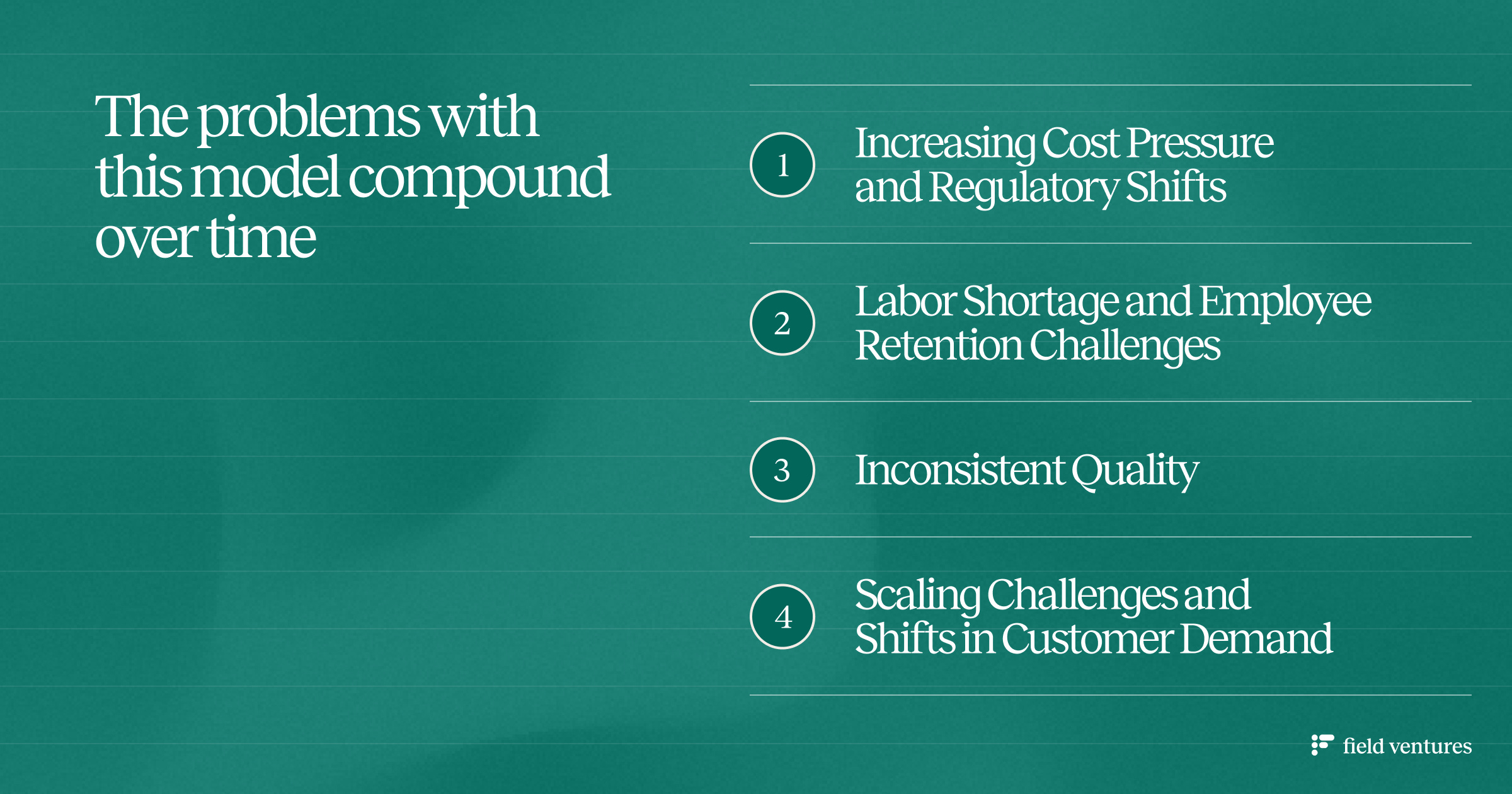
Increasing Cost Pressure and Regulatory Shifts: Even with offshore labor, personnel costs represent 60-70% of revenue for most BPOs. US-based BPOs can charge about $10 more per agent per hour, whether for basic call centers or more specialized knowledge providers. However, with similar quality outcomes, that additional cost is hard to justify to customers. Further, rising inflation and strengthening employee protection regulations are forcing BPO businesses to pay more for staff. For example, many countries have placed restrictions on the number of hours worked as well as raising minimum wage and required benefits and the US recently proposed the Keep Call Centers in America Act, all of which increase overall labor costs dramatically.
Labor Shortage and Employee Retention Challenges: Employee turnover in the BPO industry averages around 60% across all BPO types. The industry also faces a significant labor shortage, leading to longer hiring cycles and expensive onboarding and training processes that must be repeated constantly.
Inconsistent Quality: Given high turnover rates and extensive training needs, maintaining consistent quality is a persistent challenge that requires additional investment in monitoring and QA systems. This is especially critical in regulated industries like healthcare and finance, where errors can have serious consequences.
Scaling Challenges and Shifts in Customer Demand: Winning a new client means recruiting, training, and onboarding hundreds or thousands of agents. Meanwhile, clients are demanding better integrated systems, faster response times, and more personalized service. This creates both software and operational scaling challenges for existing BPOs as they try to adapt.
The core operations of BPOs rely on labor, making revenue growth almost as much a cost burden as a benefit. The inability to decouple growth from headcount puts fundamental constraints on the market, worsening as client reliance and demands continue to escalate.
How Voice AI can Transform the BPO Industry
As voice AI continues to improve, the days of frustrating conversations with automated voice response systems will be long gone. Instead, voice AI provides natural language capabilities, able to understand complex requests and handle increasingly complex tasks without human escalation. AI can also enable much more customized responses, tailored to a specific business’ style as well as complying with industry specific regulatory requirements.
The speed at which AI can access data, respond, and execute necessary next steps at 10-20x the rate of a human counterpart. AI is also continuously learning from previous interactions. Where initially, in early, more complex conversations, it may need to loop in a human, as the AI learns from those conversations, it is increasingly able to handle tasks on its own. It can also operate 24/7, allowing for round the clock execution and greater throughput without the additional cost.
Three Opportunities for New Entrants: In-house, AI-Enabled, and AI-Native BPOs
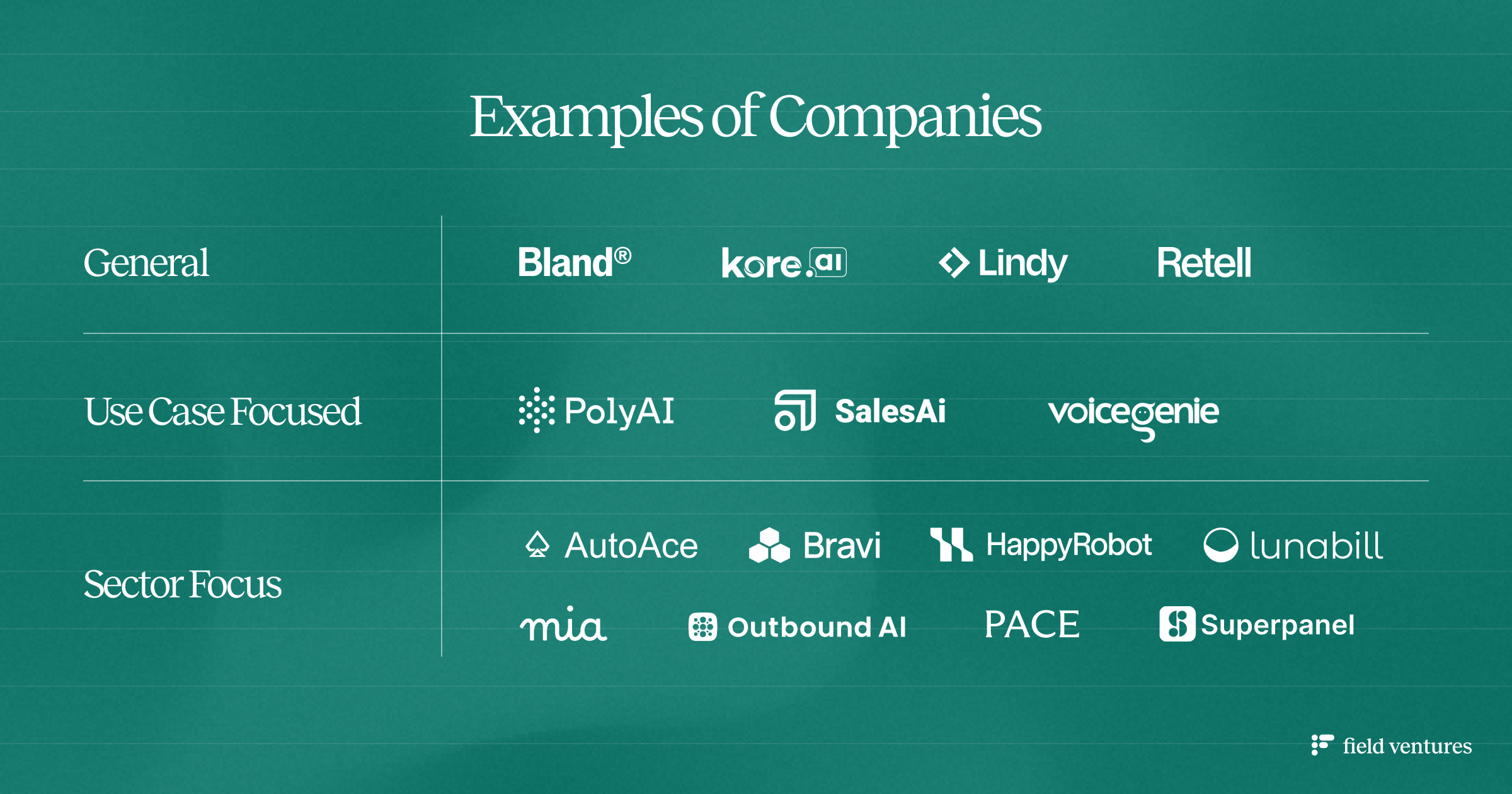
As voice AI continues to proliferate the BPO market, we see three compelling paths for innovation: companies bringing voice AI in-house, software providers selling to existing BPOs, and entirely new AI-native BPO firms.
AI Decreasing Need for Outsourcing
For most companies today, outsourcing is the only cost-efficient way to handle high-volume workflows and customer demand. However, AI is making it exponentially easier, cheaper, and faster to scale operations without adding headcount. Businesses can deploy their own voice AI agents to work alongside current employees, expanding throughput massively while maintaining seamless human intervention for exception cases.
For many companies, adopting voice AI agents will be a simple calculation of cost reduction without sacrificing customer experience. These companies are making that calculation easy by providing the tools to easily set up agents. We are already seeing this across appointment scheduling, insurance verification, customer service, and returns, to name a few categories. Rather than paying for offshore labor at $15-25 per hour per agent, companies can handle the same volume for a fraction of the cost with AI.
The demand could be enormous from small businesses that don’t want to manage service providers and prefer control over operations, to large enterprises looking to scale without additional headcount. However, we do see challenges persisting. Displacing existing BPO relationships takes time, and the setup needs to be streamlined enough that even less tech-savvy businesses can customize the infrastructure themselves.Bringing Automation to Existing BPOs
While we see a huge opportunity for bringing more operations in house efficiently, that doesn’t mean the end for BPOs. In fact, we see a huge opportunity for AI to transform how BPOs operate and scale, making them more sustainable businesses better suited to meet evolving customer needs. A BPO that previously required 1,000 agents to handle 50,000 calls per day can now manage the same volume with a fraction of agents, or handle multiples more volume with the same headcount. These software companies provide a clear ROI to the BPOs, making the sale compelling and easier to get to a “yes”.
From a GTM perspective, this is an ideal approach for new companies. By selling directly to the BPO, you get immediate access to all of their customers. This means larger end customer / revenue opportunity at the onset versus going customer to customer. Plus access to large datasets with pre-existing edge cases to train on. Some of the larger, more dominant BPOs are already integrating AI through internal development and acquisitions. While selling to these players presents a higher hurdle given their scale, the massive long tail of mid-sized and smaller BPOs provides ample opportunity to build a venture scale business.This route also gives new entrants optionality on their future business model. Given access to comprehensive data, these software businesses can learn at a faster, more comprehensive rate, potentially positioning themselves to become more efficient BPOs.
AI-Native BPO Services
Finally, we believe there’s a massive opportunity to build new AI-native BPOs from the ground up. Many customers prefer to outsource but still want the customization and efficiency that typically comes with internal operations. It is hard for an existing company to completely upend theirs for efficiency’s sake. However, starting from scratch, an AI native BPO can maximize the use of AI agents, looping in humans only for complex exceptions while ensuring high quality and lower costs than traditional models.Starting fresh removes friction around legacy systems and fragmented data. Instead, new BPOs can build unified systems that deeply understand their customers’ needs and the complexity of the industries they operate in. To provide truly top-tier value early on, AI-native BPOs will need to focus on specific verticals or use cases to ensure the best customer service and quality.
AI native BPOs will create significant data advantages over time. A technology-first approach enables a centralized hub for all use cases, calls, and workflows that continues to compound, but, crucially, unlike the systems that exist today, this data is actually structured and usable to systematically improve services.
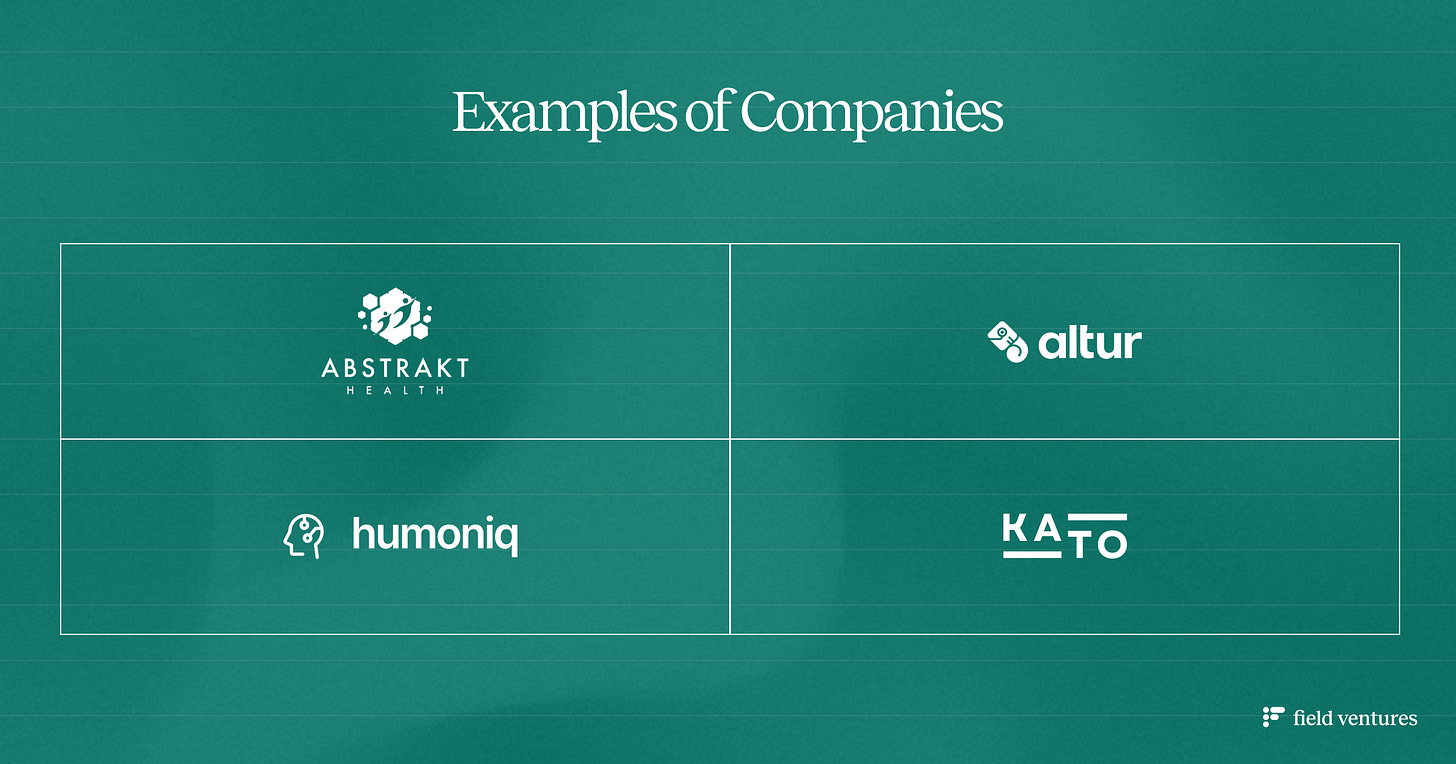
These new BPOs face the same challenges as the software direct to companies in that GTM is more of a 1:1 motion, and they will likely need to displace existing providers. However, their ability to demonstrate cost savings and superior service quality without requiring deep technical integration can significantly shorten sales cycles.
Key Considerations and Challenges
While we see huge innovation and opportunities across the BPO market, there are still several key hurdles as the technology proliferates:
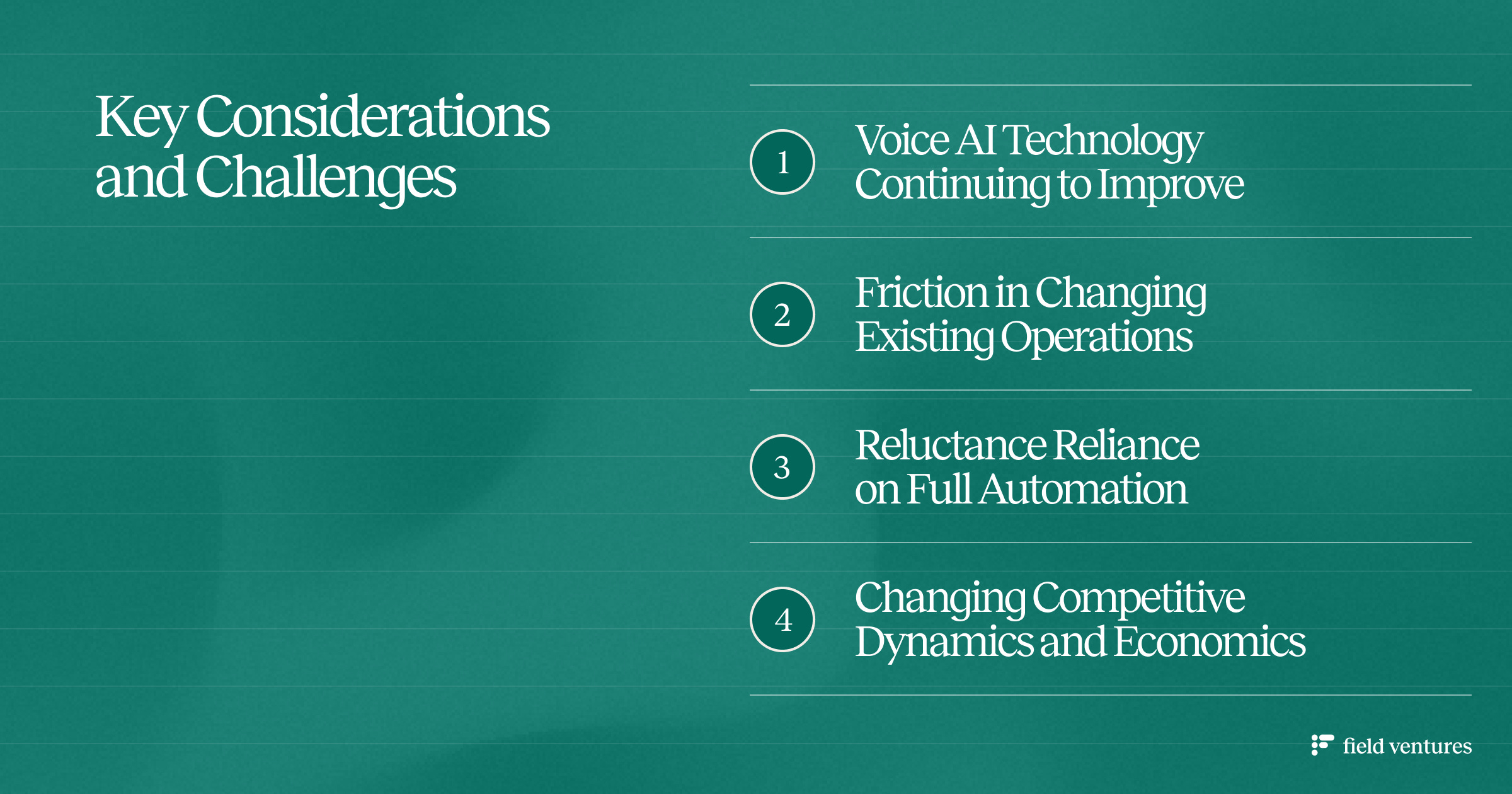
Voice AI Technology Continuing to Improve: While voice AI has improved dramatically in a short time, there is still significant room for improvement. Accuracy, proper communication with humans, and real empathy and judgment are complex challenges for AI models. Currently, voice AI works best with structured, repetitive tasks that meet many of the requirements of BPOs and includes many tasks better suited for AI vs humans. However, to truly disrupt the space at scale, the technology will need to continue advancing.
Friction in Changing Existing Operations: BPOs are extremely sticky services. As they work with a customer, they build trust and deep knowledge of the customer’s operations. They also require system integrations that often come with upfront implementation costs, creating both economic and technological sunk cost challenges. New entrants, whether direct to customers or a new BPO, need to quickly demonstrate meaningful value in cost savings and revenue generation to convince customers to switch.
Reluctance Reliance on Full Automation: BPOs often handle critical workflows, communicate with clients, and operate in highly regulated industries. Because of this, customers can be wary of removing humans from the loop entirely. However, as businesses continue to implement AI across other parts of their operations, comfort levels will increase.
Changing Competitive Dynamics and Economics: The promise that AI can help to lower costs is extremely attractive for end customers and BPOs, but it could also lead to significant pricing pressure. As existing BPOs evolve to integrate more AI, margins could compress before they expand. However, winners who can truly impact growth and efficiency will be able to differentiate and maintain pricing power.
Building a Hundred Billion+ Business
At Field, we’re actively seeking founders building voice AI solutions for the BPO ecosystem.
We believe some of the best companies will have a vertical focus and will be led by founders with deep sector expertise and exceptional talent, both of which are crucial for pricing and regulated workflows. We also see business models shifting from per employee pricing to outcomes based, providing greater alignment between the revenue generation and costs.
We see the BPO industry at an inflection point. Existing players will be forced to adopt AI or fall behind their evolving customer base and new entrants. There is an ability to drastically alter the economics of the industry will improve quality of service businesses and end customers see. Business and BPO providers, both old and new, will be able to significantly increase their capture of revenue.
For founders, this is a generational opportunity in transforming a massive industry at the intersection of labor and technology.
At Field, we are actively seeking founders building in this space. If you’re working on voice AI for BPOs or related opportunities in this space, we’d love to talk.
Compelling breakdown of how AI is restructuring BPO economics. The margin compression dynamic is key, most incumbents will try integrating AI but struggle with legacy system friction. I briefly consulted for a mid-sized healthcare BPO and the tech stack was frankenstein'd together, swapping that for AI-native infrastructure isn't trivial. What's interesting is how vertical focus plays out, specialized BPOs with domain knowledge might have more defensibility than horizontal plays because regulatory compliance is harder to commoditize.